By InstaWebhook TeamRetries and Replay
Redis Streams vs. AWS SQS vs. RabbitMQ: Choosing a Webhook Ingestion Buffer
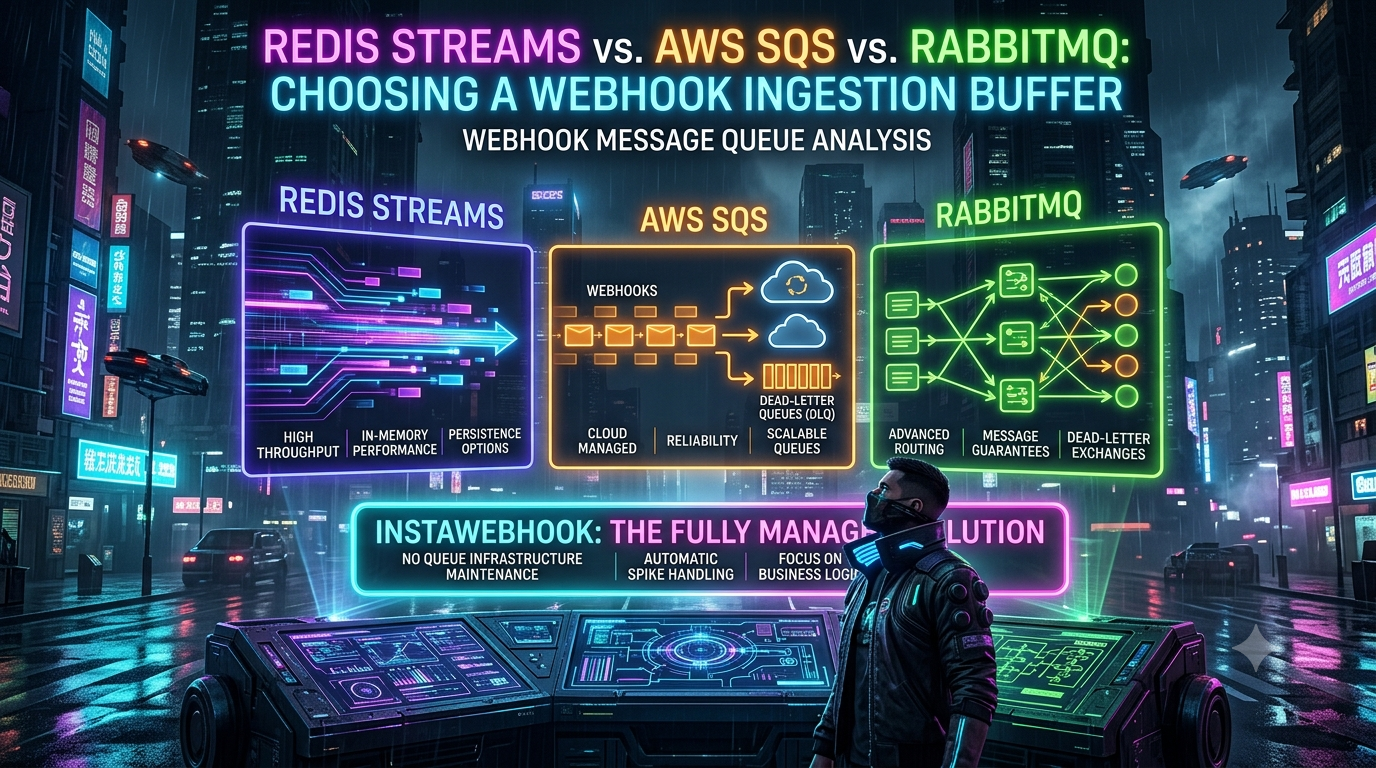
Redis Streams vs. AWS SQS vs. RabbitMQ: Choosing a Webhook Ingestion Buffer In modern cloud architectures, incoming webhooks represent an uncontrollable influx of external data.
asynchronous webhook processingat-least-once message deliveryautomated webhook retriesAWS SQS dead-letter queueAWS SQS webhookscloud message queuesdead-letter queue webhooksdecoupling webhook processingdistributed system bufferingDLQ configurationevent-driven architectureexactly-once webhook processingGitHub webhook handlerhigh-volume webhook ingestionHTTP webhook handlerInstaWebhookmanaged queue infrastructuremanaged webhook queuemessage broker comparisonmessage queue throughputopen source vs managed queuepayload ingestion queueRabbitMQ exchange bindingRabbitMQ webhook ingestionreal-time event queueRedis Streams consumer groupsRedis Streams vs SQSRedis Streams webhook bufferRedis vs RabbitMQ webhooksscaling webhook ingestionserverless webhook queueSQS vs RabbitMQStripe webhook queuewebhook backpressurewebhook buffer queuewebhook buffer vs message queuewebhook delivery guaranteewebhook failover queuewebhook fault tolerancewebhook gateway architecturewebhook infrastructurewebhook ingestion architecturewebhook ingestion bufferwebhook message queuewebhook observabilitywebhook persistence guaranteeswebhook proxy servicewebhook queue architecturewebhook rate limitingwebhook reliabilitywebhook retry policywebhook spike absorberwebhook throughput comparisonwebhook traffic spikes